
Chimney Flashing Repair in Carmenita, Cerritos, CA
In Short Chimney flashing repair in Carmenita, Cerritos, CA (90703) fixes leaks where the chimney meets the roof — the single most leak-prone detail on homes with fireplaces. Step flashing, counter-flashing, and the cricket (saddle) all have to work together. We rebuild the flashing system correctly. Call (888) 974-0663.
Chimneys are the most complex flashing detail on your roof — and the most common leak source we fix. Roof Leak Repair Experts is the local roof leak repair specialist for chimney flashing repair in Carmenita, Cerritos, CA. Light-industrial and office buildings here have flat roofs with extensive rooftop equipment curbs. We handle Carmenita, CA 90703 roof leaks every week.
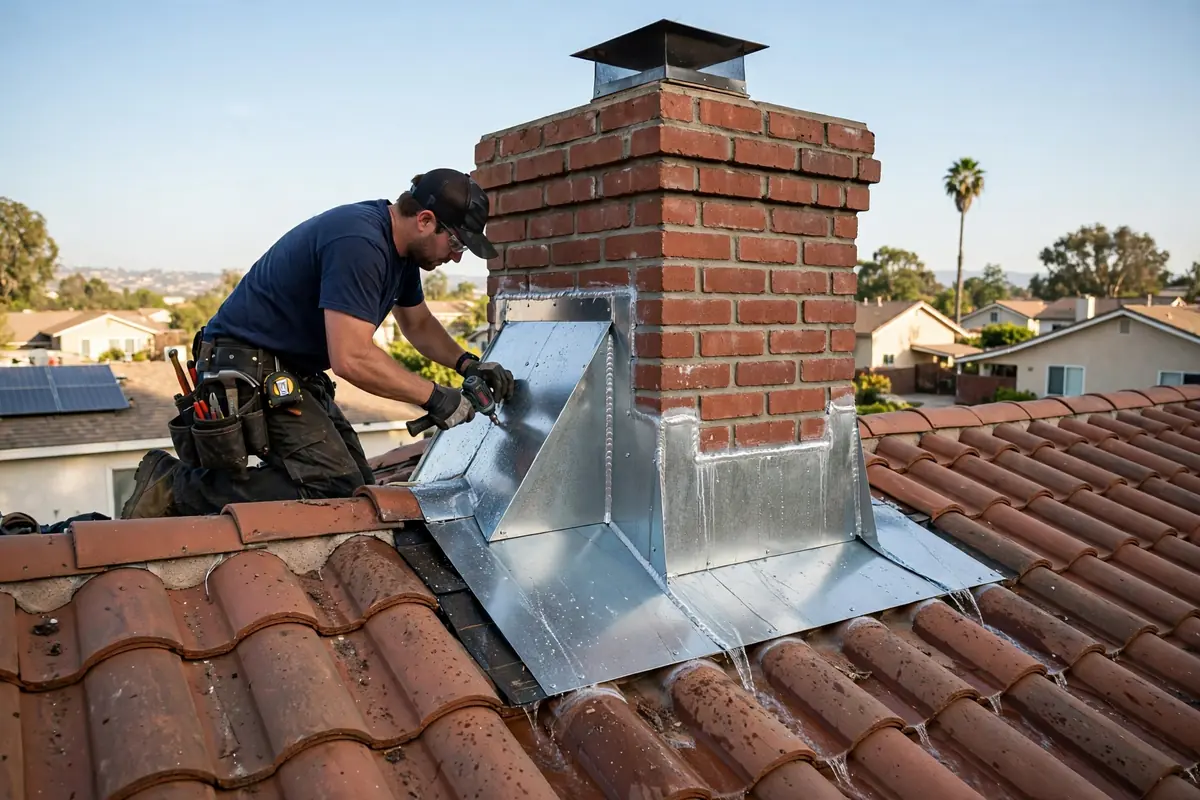
Chimney flashing repair rebuilds the waterproof transition between your chimney and the roof. We remove failed step and counter flashing, inspect the cricket and masonry, install new metal properly regletted into mortar joints, and seal the crown — then water-test the whole assembly. Equipment penetrations and aging single-ply seams are the dominant leak sources.
Masonry Leaks vs. Flashing Leaks in Cerritos
Here's what many roofers miss: water can enter through cracked chimney crowns, deteriorated mortar, or porous brick — and appear inside exactly like a flashing leak. Carmenita is north Cerritos' industrial corridor around the ADP-1 Industrial Park. We inspect the masonry as part of every chimney diagnosis.
If the masonry is the culprit, we seal or rebuild the crown and tuckpoint bad joints — often alongside the flashing work, so the chimney is watertight from every angle.
- Crown cracks admit water into masonry
- Deteriorated mortar joints leak
- Porous brick wicks water inside
- We diagnose masonry + flashing together
Why Carmenita Chimneys Leak More Than You'd Expect, CA 90703
Light-industrial and office buildings here have flat roofs with extensive rooftop equipment curbs. Freeze-thaw cycles (where they occur), wind-driven rain, and decades of thermal movement all work mortar joints and flashing loose. Chimneys also concentrate roof runoff — a wide chimney without a cricket takes the full force of the upslope roof's water.
In Carmenita we also see chimneys where the original flashing was installed to minimum standards decades ago and has simply reached end of life. Equipment penetrations and aging single-ply seams are the dominant leak sources.
- Concentrated runoff at wide chimneys
- Original minimum-standard flashing aged out
- Wind-driven rain at the uphill face
- Thermal movement working joints loose
The Four Parts of Chimney Flashing — and How Each Fails
Step flashing runs up the chimney sides, counter flashing is set into the mortar joints above it, apron flashing covers the downhill face, and a cricket diverts water around the uphill face. In Carmenita we find counter flashing pulled from eroded mortar, missing crickets on wide chimneys, and aprons corroded through. Carmenita is north Cerritos' industrial corridor around the ADP-1 Industrial Park.
Because these parts work as a system, patching one while another fails is wasted money. We assess and repair the full assembly.
- Counter flashing pulled from mortar joints
- Missing cricket behind wide chimneys
- Corroded apron flashing
- Cracked crown letting water into masonry
How Chimney Flashing Repair Works Differently in Carmenita
Chimney leaks in Carmenita follow a familiar script: the stain appears on the ceiling near the fireplace, often after wind-driven rain, and the culprit is almost always flashing — not the chimney itself. On 1960s–70s tract ranch homes, original step flashing is now decades old; mortar joints have opened, counter-flashing has pulled away, and many chimneys never got a cricket to divert water on the uphill side. Around the Carmenita Rd corridor, we rebuild these systems with new step flashing woven into the courses, proper counter-flashing reglet-cut into the mortar, and a cricket where the chimney is wide enough to pond water. It’s meticulous work, and it’s the only thing that actually stops chimney leaks.
Santa Ana winds drive rain sideways into chimney joints — that’s why many Cerritos-area chimney leaks only appear during wind-driven storms and stay dry in gentle rain. If your leak is wind-dependent, the flashing joint is the prime suspect, and surface sealant on the brick won’t fix it.
What to Expect From Your Carmenita, CA 90703 Visit
Chimney flashing repair typically takes a full day: remove surrounding roofing courses, install new step flashing and underlayment, cut and set counter-flashing into the mortar joints, add a cricket if needed, and re-lay courses. Masonry touch-ups to open mortar joints are quoted separately and honestly.
Why Cerritos Homeowners Call Early
The roofs in this area fail on a predictable schedule — tract-era flashing at 25–35 years, boots at 15–20, tile underlayment at 30+. Calling at the first stain instead of the fifth saves most homeowners from decking replacement, because water that’s been traveling for a year rots wood the whole way. An early diagnostic visit with photos costs little and tells you exactly where you stand: monitor, maintain, or repair now.
After the Repair: Keeping It Dry
Once the leak is fixed, two habits keep it that way: keep valleys and gutters clear (especially before the winter rainy season), and get the roof looked at after major wind events. Small maintenance — resetting a slipped tile, resealing a pipe boot — costs almost nothing compared to the interior damage a neglected detail eventually causes. We’ll tell you what to watch on your specific roof before we leave.
Preparing for Your Appointment
Before we arrive, clear a path to attic access and move valuables away from the leak area — place a bucket under active drips and, if paint is bubbling, resist the urge to pop it (that releases trapped water all at once). Note when the leak appears: only in heavy rain, after wind, or constantly. That timing is diagnostic gold. If you have roof documents from a past re-roof, have them handy — knowing the roof’s age and material focuses the inspection immediately.
Warning Signs: When Carmenita Homeowners Should Call About Chimney Flashing Repair
- Ceiling stains on or near the fireplace chase in 1960s–70s tract ranch homes.
- Rust streaks running down the chimney or onto surrounding roofing.
- Loose, pulling, or missing counter-flashing where metal meets masonry.
- Water entry that only happens during wind-driven rain.
- Deteriorated mortar joints or a cracked chimney crown.
- Efflorescence (white mineral stains) on the chimney brick — water is moving through it.
Chimney Flashing Repair Cost Factors in Carmenita, CA 90703
Chimney flashing rebuilds in Carmenita (90703) typically run as a full-day job: the labor is the cost, since the materials (step flashing, counter-flashing, underlayment) are modest. Wide chimneys needing a new cricket, or chimneys with deteriorated mortar requiring masonry touch-ups, add to the scope — quoted separately and honestly. It’s meticulous work, and the price reflects a full day of it, not a caulk tube.
Related Services
Helpful Roofing Guides
Chimney Flashing Repair in Carmenita FAQs
Will the new flashing match my chimney and roof?
We use corrosion-resistant metals and reglet the counter flashing into your mortar joints for a clean, professional look that suits the chimney.
Is the leak the chimney or the flashing?
Nine times out of ten, it’s the flashing system — the metal joint between chimney and roof — not the chimney structure. We verify with attic inspection (water trails tell the story) and a close look at the flashing details before quoting anything.
Can you just re-caulk around the chimney?
Caulk over failed flashing buys months at best. The joint moves with temperature and the old metal underneath keeps corroding. A rebuilt flashing system is the permanent fix; caulk is what we use to seal the new system’s edges, not to substitute for it.
What is a chimney cricket and does mine need one?
A cricket (saddle) is a small peaked diverter on the uphill side of wide chimneys that splits water around the chimney instead of letting it pond. Building code calls for them on chimneys over 30 inches wide — many older Carmenita homes never got one, and adding it stops a whole class of leaks.
Can you just caulk the flashing?
Surface caulking over failed chimney flashing lasts a season or two at best. Proper repair means new step and counter flashing regletted into the mortar joints. We do it right so it lasts decades.
How long does chimney flashing repair take?
Most chimney re-flash jobs take a full day including cricket and crown work. Simple reseals can be done in half a day.