
Chimney Flashing Repair in Bellflower, Cerritos, CA
In Short Chimney flashing repair in Bellflower, Cerritos, CA (90706) fixes leaks where the chimney meets the roof — the single most leak-prone detail on homes with fireplaces. Step flashing, counter-flashing, and the cricket (saddle) all have to work together. We rebuild the flashing system correctly. Call (888) 974-0663.
Chimneys are the most complex flashing detail on your roof — and the most common leak source we fix. Roof Leak Repair Experts is the local roof leak repair specialist for chimney flashing repair in Bellflower, Cerritos, CA. Bellflower is the adjacent city of postwar 1940s–60s homes, many with original-era roof structures. We handle Bellflower, CA 90706 roof leaks every week.
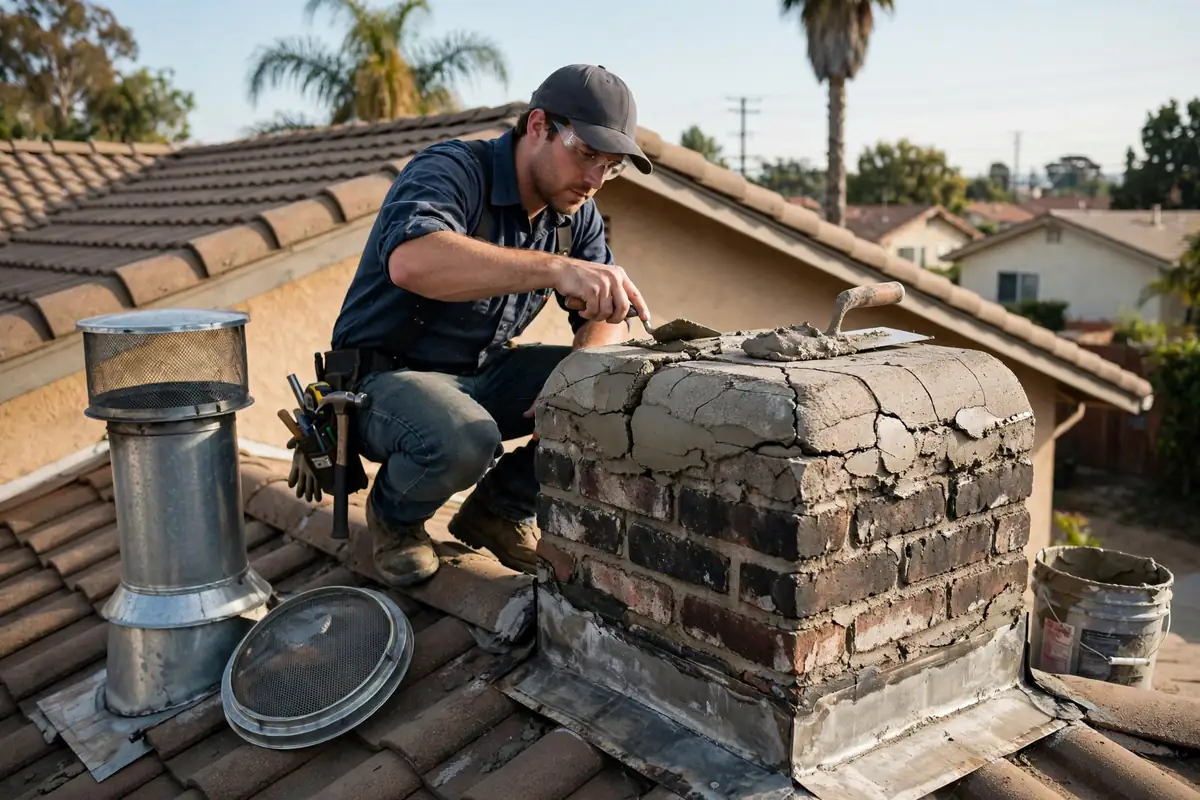
Chimney flashing repair rebuilds the waterproof transition between your chimney and the roof. We remove failed step and counter flashing, inspect the cricket and masonry, install new metal properly regletted into mortar joints, and seal the crown — then water-test the whole assembly. Older housing stock means multiple roofing layers and long-past-due flashing details are common.
After the Repair: Keeping Your Chimney Dry
We recommend a chimney inspection every few years — mortar and crowns keep aging even after the flashing is new. Keep the cricket and valleys above the chimney clear of debris so water diverts properly.
If your chimney has a cap, keep it in good repair; an uncapped flue admits surprising amounts of water. Mature street trees drop heavy seasonal debris into valleys and gutters. And call us at the first sign of interior staining near the fireplace — early is cheap.
- Call early at first staining
- Inspect mortar and crown every few years
- Keep cricket and valleys debris-free
- Maintain the chimney cap
Our Chimney Flashing Repair Process
We strip the failed flashing, grind out mortar joints to the proper depth, install new step flashing woven with the shingles, and set new counter flashing regletted and sealed into the joints — the correct method, not surface caulking.
The cricket gets built or rebuilt to code, the crown is sealed or rebuilt, and the masonry is inspected for cracks that need tuckpointing. Older housing stock means multiple roofing layers and long-past-due flashing details are common. Then the whole chimney gets water-tested.
- Full water testing of the assembly
- Mortar joints ground to proper depth
- New step + counter flashing system
- Cricket built or rebuilt to code
What Chimney Flashing Repair Costs in Bellflower, CA 90706
A straightforward counter-flashing reseal and repair is affordable; a full chimney re-flash with cricket work and crown repair costs more but solves the problem for decades.
Chimney work is skilled labor at height — beware quotes that seem too cheap; they usually mean surface caulking instead of proper regletted flashing. Older housing stock means multiple roofing layers and long-past-due flashing details are common. Our quotes are itemized so you can see the difference.
- Proper regletted flashing, not caulk
- Cricket and crown work included when needed
- Photo-documented inspections
- Itemized quotes — no vague lump sums
How Chimney Flashing Repair Works Differently in Bellflower
If your Bellflower (90706) home has a fireplace and a ceiling stain nearby, start by suspecting the flashing. Chimneys are essentially holes punched through the roof, and the metal system sealing that joint lives a hard life — thermal movement, mortar decay, and decades of water. 1950s–60s ranch homes in this area commonly shows the full set: rusted step flashing, failed sealant where counter-flashing meets brick, and missing crickets. Our repair removes the compromised courses around the chimney, installs a complete new flashing system, and re-lays the roofing — addressing the joint as a system, not a caulk line.
Older mortar matters here: once mortar joints open up, water enters the chimney structure itself and can emerge as a “roof leak” far from the actual entry. We check the chimney crown and mortar condition as part of every chimney-leak diagnosis.
What to Expect From Your Bellflower, CA 90706 Visit
You’ll get photos of the old flashing we removed — homeowners are usually surprised how far gone it was — plus photos of the new system before courses go back on.
Preparing for Your Appointment
Before we arrive, clear a path to attic access and move valuables away from the leak area — place a bucket under active drips and, if paint is bubbling, resist the urge to pop it (that releases trapped water all at once). Note when the leak appears: only in heavy rain, after wind, or constantly. That timing is diagnostic gold. If you have roof documents from a past re-roof, have them handy — knowing the roof’s age and material focuses the inspection immediately.
Warning Signs: When Bellflower Homeowners Should Call About Chimney Flashing Repair
- Ceiling stains on or near the fireplace chase in 1950s–60s ranch homes.
- Rust streaks running down the chimney or onto surrounding roofing.
- Loose, pulling, or missing counter-flashing where metal meets masonry.
- Water entry that only happens during wind-driven rain.
- Deteriorated mortar joints or a cracked chimney crown.
- Efflorescence (white mineral stains) on the chimney brick — water is moving through it.
Chimney Flashing Repair Cost Factors in Bellflower, CA 90706
Chimney flashing rebuilds in Bellflower (90706) typically run as a full-day job: the labor is the cost, since the materials (step flashing, counter-flashing, underlayment) are modest. Wide chimneys needing a new cricket, or chimneys with deteriorated mortar requiring masonry touch-ups, add to the scope — quoted separately and honestly. It’s meticulous work, and the price reflects a full day of it, not a caulk tube.
How We Diagnose Chimney Flashing Repair Problems in Bellflower
Diagnosis is where Chimney Flashing Repair jobs succeed or fail, so we treat it as its own discipline in Bellflower, CA 90706. The visit starts inside: we map the stain, then get into the attic to trace the moisture path with meters — water almost always travels along rafters or decking before it drips, which is why the entry point sits uphill from the stain. That attic evidence narrows the roof-surface search to a specific zone instead of the whole roof. Outside, we inspect that zone detail by detail: every penetration, flashing line, seam, and transition gets a close look, because on 1950s–60s ranch homes the failure is usually one specific detail, not general wear. Where visual inspection isn’t conclusive, controlled water testing isolates the entry point — we wet one section at a time and watch, so there’s no guessing. You get photos of the failure, the moisture readings, and a written scope before any repair work is discussed. That discipline is the difference between a repair that holds and a stain that comes back next storm.
- Interior stain mapping and attic moisture tracing with meters
- Roof-zone inspection focused by the attic evidence, not the whole roof
- Controlled water testing when visual inspection isn’t conclusive
- Photo-documented findings and a written, itemized repair scope
Related Services
Helpful Roofing Guides
Chimney Flashing Repair in Bellflower FAQs
Do you rebuild chimney crowns too?
Yes. We seal minor crown cracks and rebuild deteriorated crowns as part of chimney waterproofing — a new flashing job on a failed crown still leaks.
Is the leak the chimney or the flashing?
Nine times out of ten, it’s the flashing system — the metal joint between chimney and roof — not the chimney structure. We verify with attic inspection (water trails tell the story) and a close look at the flashing details before quoting anything.
Can you just re-caulk around the chimney?
Caulk over failed flashing buys months at best. The joint moves with temperature and the old metal underneath keeps corroding. A rebuilt flashing system is the permanent fix; caulk is what we use to seal the new system’s edges, not to substitute for it.
What is a chimney cricket and does mine need one?
A cricket (saddle) is a small peaked diverter on the uphill side of wide chimneys that splits water around the chimney instead of letting it pond. Building code calls for them on chimneys over 30 inches wide — many older Bellflower homes never got one, and adding it stops a whole class of leaks.
Why does my chimney leak even though the roof looks fine?
Because the leak is at the flashing transition, not in the field shingles. Chimney flashing has four components working as a system — when one fails, water enters while the surrounding roof looks perfect.
Could the leak be the masonry, not the flashing?
Yes — cracked crowns and deteriorated mortar admit water that looks exactly like a flashing leak. We inspect the masonry as part of every chimney diagnosis and repair both when needed.